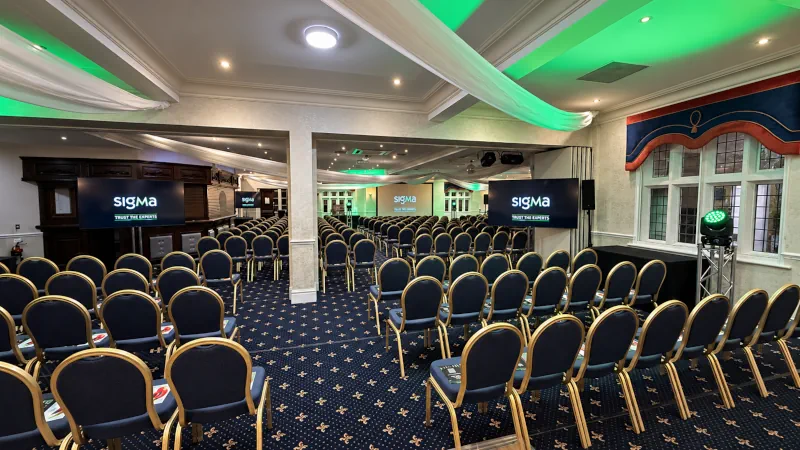
An LED video wall can make a big difference to an event. It can bring a presentation into clear view, help a festival audience see the action on stage or turn an exhibition stand into something people stop to look at.
Choosing the right screen takes a little planning, though. The largest display isn’t always the best fit, and screen resolution is only one part of getting a good result.
Before booking LED video wall hire, think about your audience, venue and what you want to show. These six considerations will help you get started.
1. Choose a screen size that suits your audience and venue
Start with what the audience needs to see. A conference presentation with text and charts has different requirements from a stage backdrop showing colourful visuals.
Think about the people at the back of the room as well as those near the front. Will they be able to read the important information? Could the stage, furniture or other guests block their view?
It also helps to consider the available height and width, rather than judging the screen size from floor space alone. Leave room for the supporting structure and any other equipment around it.
When making an enquiry, share photographs, room dimensions or a venue plan if you have them. These make it much easier to recommend a screen that fits the space and gives the audience a useful view.
2. Understand pixel pitch and viewing distance
Pixel pitch is the distance between the centres of neighbouring LED pixels, measured in millimetres. A smaller pixel pitch places more pixels within the same screen area, allowing finer detail.
This matters most when people are close to the screen or when the content includes smaller text, diagrams and detailed graphics.
Audioserv stocks both 2.9mm and 3.9mm pixel pitch LED screens. Our 2.9mm panels are a useful option for conferences and exhibitions with closer viewing distances, while 3.9mm can suit stages and larger audience areas.
There is no single viewing-distance rule that works for every event. The screen dimensions, content and audience expectations all influence the choice. Tell your supplier what you plan to display and how close people will be, so they can recommend an appropriate option.
3. Explain whether the screen will be indoors or outdoors
An outdoor screen needs to suit the conditions in which it will operate. Daylight, rain, wind and the location of the installation all need to be considered during planning.
For daytime events, brightness matters because the image must remain visible in the surrounding light. Indoors, the screen should be adjusted to suit the room so it remains comfortable to watch.
Weather protection is only part of an outdoor setup. The supporting structure, ground conditions, power arrangements and operating procedures also need to be suitable for the site.
Let your supplier know whether the screen will be in an open space, under cover or inside a marquee. A few site photographs and an accurate description are far more useful than simply describing the event as “outdoors”.
4. Plan your content before finalising the screen format
What will the screen actually show?
Presentations, sponsor logos, live cameras, promotional videos and stage visuals each place different demands on the setup. Knowing this early helps your supplier plan the screen format and the equipment needed to run it.
A standard widescreen presentation may suit a conventional rectangular display. A wide stage backdrop or curved screen may need content prepared specifically for its shape.
Before creating the final artwork, ask for the required content resolution and aspect ratio. This helps avoid stretched logos, cropped videos and awkward empty areas.
Keep presentation text clear, use strong contrast and avoid overcrowding slides. A screen can display detailed content, but the audience still needs enough time and space to understand it.
If you need live camera pictures or several presentation sources, mention this at the enquiry stage so the switching and video processing can be included.
5. Check installation access, power and setup time
The screen itself is only part of the installation. Your supplier also needs to plan how it will be supported, connected, tested and removed.
Useful details to check with your venue include:
- Access routes, door sizes, stairs and goods lifts.
- The available space around and behind the screen.
- Suitable power supplies and their locations.
- Any restrictions on rigging or floor loading.
- The time available for installation and removal.
A short access window can affect crew requirements and the order in which other suppliers need to work. Share the event schedule early, including rehearsals and the time guests will arrive.
Allow time for testing with the actual presentation or video files. Finding a formatting issue during setup is much easier to deal with than discovering it when the event starts.
6. Compare the complete hire package and technical support
When comparing quotations, check what each one includes. The screen dimensions alone won’t tell you whether two packages offer the same service.
Ask about delivery, installation, supporting structures, video processing, cabling, testing and removal. Establish whether an operator is included and who will manage the content during the event.
For a straightforward display showing a repeating video, the operating requirements may be relatively simple. A conference with multiple speakers, presentation laptops and live cameras needs more coordination.
Give your supplier a realistic budget and explain what matters most. This allows them to recommend a suitable balance of screen size, image detail and technical support.
A clear quotation should help you understand the complete setup and any additional costs before you commit.
Planning LED Video Wall Hire for Your Event?
You don’t need to arrive with every technical detail worked out. Start with your event date, venue, audience size and a description of what you want the screen to show.
At Audioserv, we help customers choose a suitable screen and plan how it will fit into their event. Based in Leeds, we provide LED video wall hire across Yorkshire and throughout the UK, with installation and technical support to suit the production.
Explore our LED video wall hire options, or contact Audioserv to discuss your plans.