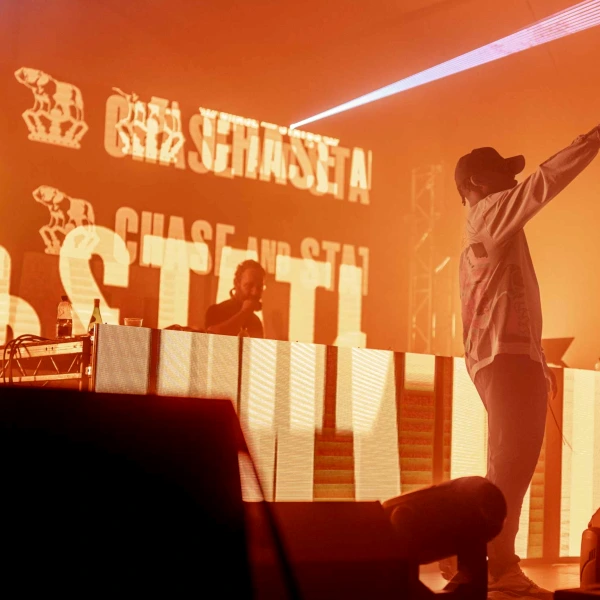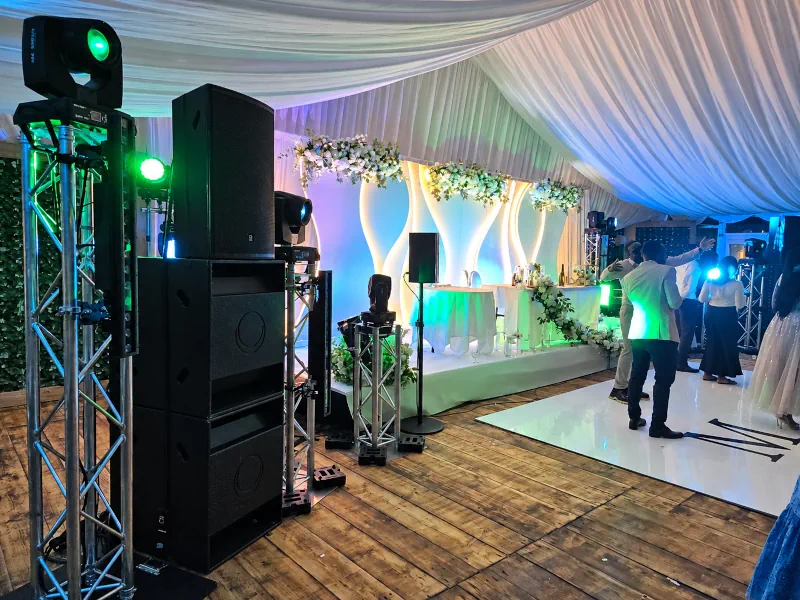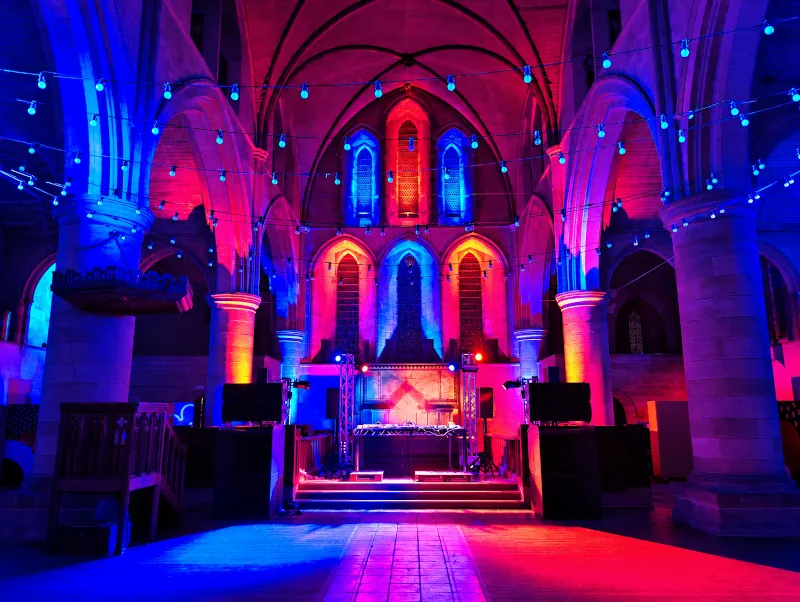
Good lighting helps people see what matters and creates the right atmosphere for your event. It can make a conference stage feel professional, bring energy to a live performance or transform a plain room into an inviting space.
Choosing event lighting involves more than picking colourful fixtures. The venue, programme and overall look all influence what will work best.
Before booking lighting hire, these seven considerations will help you explain your plans and choose a suitable setup.
1. Decide what you want the lighting to achieve
Start with the purpose of the lighting. Do you need guests to see a presenter clearly, create a welcoming atmosphere or give a live performance more visual impact?
Most events need a combination of these things. A corporate dinner might require subtle room lighting during the meal, clear lighting for speeches and a livelier look when the entertainment begins.
Think about the different stages of your event rather than choosing one look for the entire day.
A few reference photographs can help communicate your ideas. Explain what you like about them, whether that’s the colours, the stage design or the overall mood. Your supplier can then suggest an approach that suits your venue and budget.
2. Share the venue layout and practical restrictions
Lighting equipment needs suitable positions, power and enough space to do its job.
Tell your supplier about the room dimensions, ceiling height, stage location and audience layout. Photographs or a venue plan are especially useful if they haven’t worked there before.
Check any restrictions with the venue early. There may be limits on attaching equipment to the building, using existing rigging points or positioning stands near walls and walkways.
For outdoor events and marquees, explain how the equipment will be covered and where it will be installed. Your supplier needs to plan equipment, supporting structures and working arrangements appropriate to the location.
Agreeing these details before booking helps avoid arriving with a lighting design that cannot be installed as intended.
3. Make sure performers and presenters are easy to see
Colourful effects can look impressive, but they don’t necessarily provide the light needed on someone’s face.
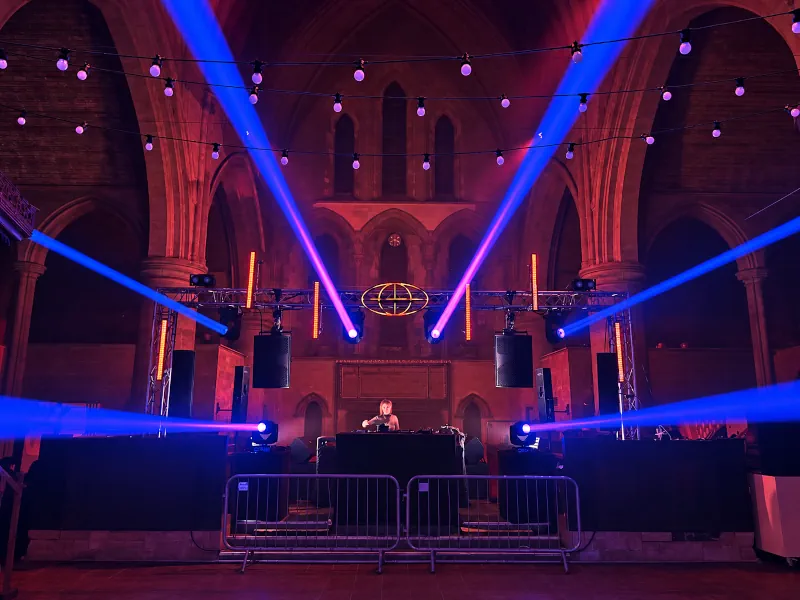
For speeches, conferences and live performances, suitable front lighting helps the audience follow what’s happening. It also helps photographers and camera operators capture the people on stage.
Consider where presenters and performers will move. Lighting a lectern alone may be insufficient if the speaker walks across the stage or joins a seated panel.
If you’re recording, streaming or showing live camera pictures, include those requirements in the brief. The technical team can check how the lighting looks through the cameras as well as from the audience.
The aim is a comfortable balance: people should be clearly visible without the lighting becoming distracting or unpleasant for them.
4. Choose colours and effects that suit the event
Lighting should support the occasion and its audience.
Warm, restrained lighting may suit a dinner or reception, while a dance event may call for stronger colours and more movement. A product launch could use lighting to complement a brand’s visual identity.
Think about how different elements will work together. Room uplighting, stage washes, LED battens and moving lights each contribute something different to the finished look.
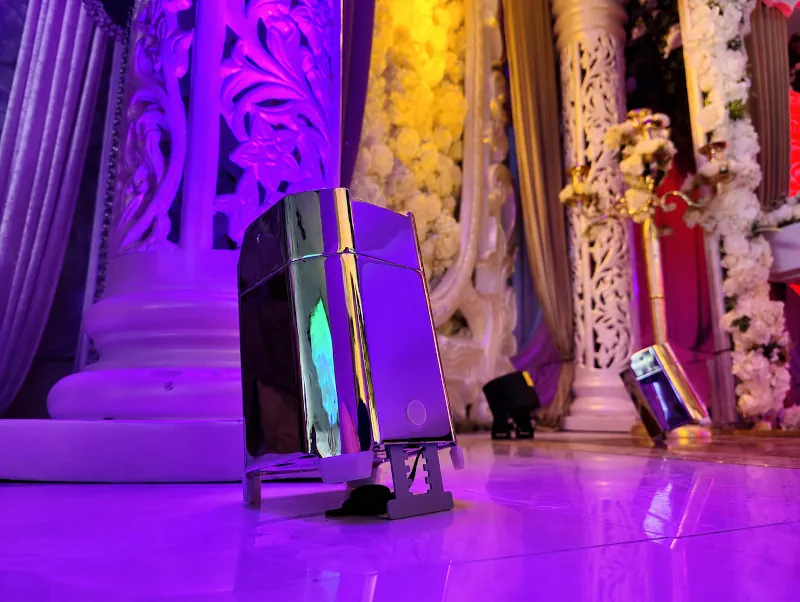
More fixtures won’t automatically produce a better result. Well-positioned equipment and a coherent colour scheme can be more effective than a large collection of competing effects.
If you’re considering strobes or other intense effects, discuss their suitability, accessibility considerations and any venue requirements with your supplier before including them.
5. Discuss haze, lasers and specialist effects early
Haze can make lighting beams more visible, adding depth to a stage or dance-floor design. However, its use needs to be agreed with the venue and considered alongside the building’s fire detection arrangements.
Tell your supplier whether haze is permitted before a design is finalised. The lighting should still be planned around what can actually be used at the venue.
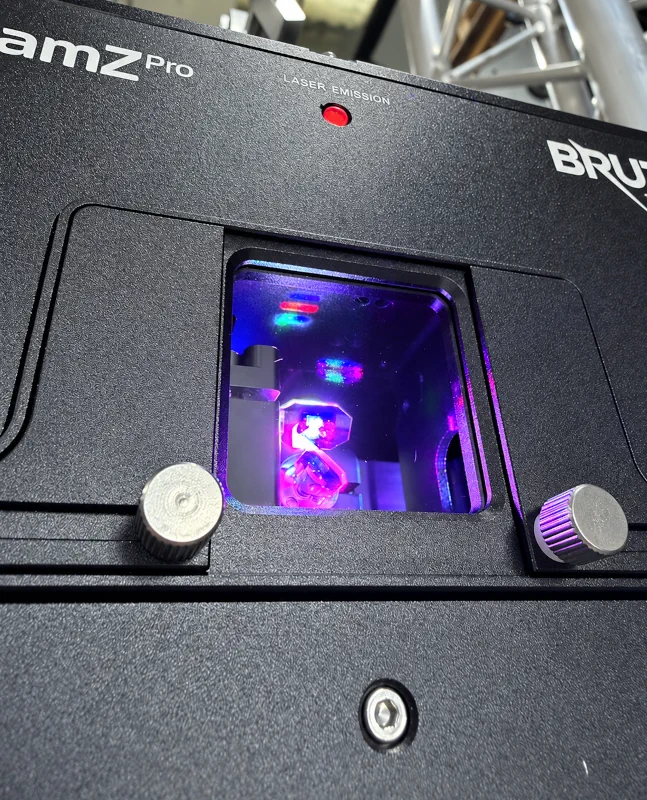
Lasers also need specific planning. They should be treated as a specialist part of the production, with competent people assessing the installation and operating arrangements.
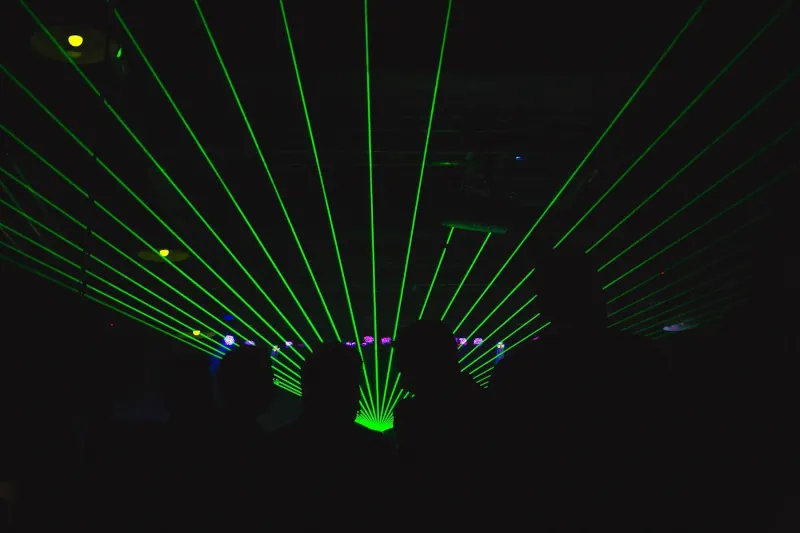
If you have a particular effect in mind, raise it at the enquiry stage. Your supplier can explain what’s involved, whether it suits the event and what additional arrangements may be needed.
6. Allow time for installation, programming and testing
A lighting setup needs time to be built, connected, focused and checked.
For a simple arrangement, preparation may be relatively straightforward. A larger production with several fixture types, programmed sequences or coordinated video content will need more time.
Share the full event schedule, including venue access, rehearsals, guest arrivals and the time equipment must be removed.
Your supplier should also know about stairs, loading restrictions and shared access with other contractors. These details affect crew requirements and how the installation is organised.
Where lighting changes need to follow speeches, performances or video playback, provide a running order. A rehearsal or technical walkthrough gives everyone a chance to confirm cues before the event begins.
7. Confirm who will operate the lighting and what the quote includes
Decide whether you need equipment to operate yourself or a lighting package with technical support.
For experienced production teams, dry hire can provide the fixtures and control equipment needed for an existing setup. If you’re less familiar with event lighting, explain this so your supplier can recommend an appropriate service.
An event with changing performances or carefully timed cues may benefit from a lighting operator who can manage the look throughout the programme.
When comparing quotations, check whether they include:
- Lighting fixtures and suitable control equipment.
- Stands, truss or other agreed supporting equipment.
- Power distribution and cabling within the supplier’s scope.
- Delivery, installation, testing and removal.
- Programming, rehearsals and on-site operation.
- The agreed hire period and any additional charges.
Clarify responsibilities where several suppliers are involved. A clear agreement helps everyone understand who is providing each part of the setup and who will manage it during the event.
Planning Event Lighting with Audioserv
You don’t need a finished lighting design before contacting us. Your event date, venue, audience size and a description of the atmosphere you want to create are a useful starting point.
At Audioserv, we supply lighting for corporate events, live music, festivals and dance events. We can help with equipment selection and technical production, or provide lighting dry hire for eligible business customers.
Based in Leeds, we work across Yorkshire and throughout the UK, supplying lighting on its own or alongside sound, video and complete event production.
Explore our event lighting hire options, find out about our event production services, or contact Audioserv to discuss your plans.