A beer festival brings together more than great drinks. Live music, food, entertainment and a welcoming atmosphere can all encourage visitors to stay longer and enjoy the occasion.
Behind that experience is a technical setup that needs to work around bars, traders, performers and a changing crowd. Thinking through the production requirements early helps avoid last-minute changes and gives everyone a clearer plan.
Whether you’re organising a community fundraiser or a festival with several days of entertainment, these ten considerations will help you prepare.
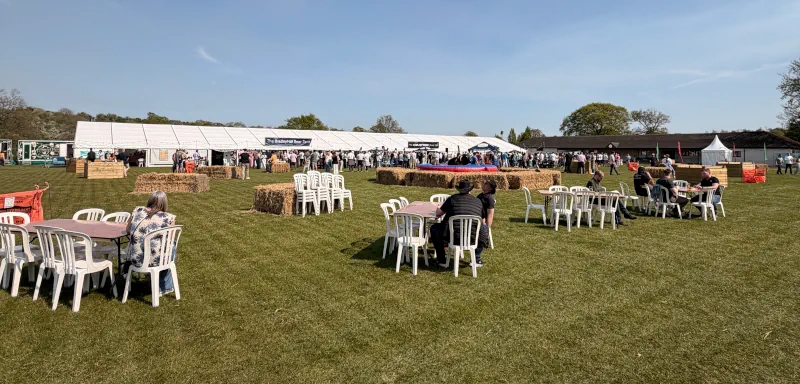
Case Study - Wetherby Beer Festival 2026
1. Plan the site around how visitors will use it
Start with a site plan showing the stage, bars, food traders, seating, entrances and other key areas.
Think about how people will move between them. A stage might look well positioned on paper, but queues, busy walkways or a large tent could affect the audience’s view and the way sound reaches them.
Separate practical working space from public areas wherever possible. Your production team needs access to equipment, while performers need somewhere to load in and prepare.
Share the plan with your suppliers before positions are finalised. It’s much easier to adjust a layout before the bars, stage and technical equipment arrive.
2. Choose a sound system for the listening area
A beer festival often has several different sound requirements. The main stage needs to support the entertainment, while other areas may need background music or announcements.
Audience numbers are a starting point, but coverage matters just as much. A compact marquee and a wide outdoor site can require different speaker arrangements, even with similar attendance.
Consider where people will actively listen to the music and where they’ll want to hold a conversation. The aim is to give the entertainment appropriate impact while keeping the rest of the site comfortable.
Tell your sound supplier about nearby properties and any venue or event sound restrictions. These details can influence the system design and speaker positions.
3. Collect technical requirements from performers
Ask bands, solo performers and DJs for their technical requirements well before the festival.
For a band, this will usually include an input list and stage plan showing instruments, microphones and performer positions. You should also confirm whether they need monitor speakers, DI boxes or any shared equipment.
Check what each act is bringing and what the organiser is expected to provide. Don’t assume that every drummer will bring a complete kit or that every DJ uses the same equipment.
Where several acts share a stage, your production supplier can help identify sensible common equipment. Agreeing this in advance can reduce changeover time and keep the stage less cluttered.
4. Allow enough time for setup and changeovers
The public programme is only one part of the schedule. Your technical team also needs time to build, test and prepare the equipment before the first visitors arrive.
Include performer arrival times, soundchecks and changeovers in the running order. A full band generally needs more preparation than a solo act using a microphone and playback.
Be realistic about the gaps between performances. Removing instruments, repositioning microphones and checking the next act all take time.
Agree on what happens between sets, including background music and announcements. Give the stage team a named organiser who can make decisions if the programme changes.
5. Plan stage lighting for daytime and evening use
Lighting requirements can change significantly as the festival moves from afternoon into evening.
During daylight, the stage may already be bright, but performers under a deep marquee roof can still need dedicated lighting. After dark, suitable front lighting helps the audience see faces, while colour and movement can support the atmosphere.
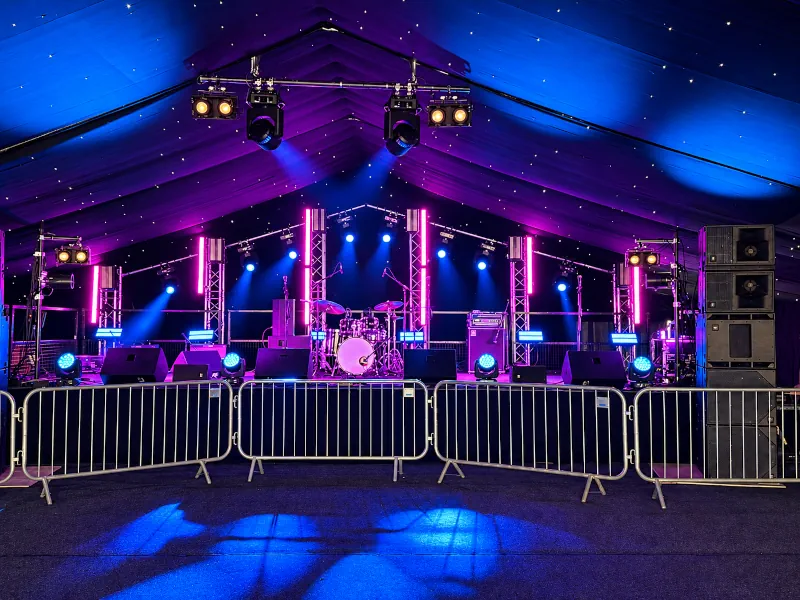
Decorative lighting and performance lighting serve different purposes. A colourful stage backdrop doesn’t necessarily make the singer easy to see.
Let your lighting supplier know the performance times, stage dimensions and type of entertainment. If you’re recording or showing live camera pictures, include that in the brief too.
6. Coordinate power requirements across suppliers
Bars, refrigeration, food traders, stage equipment and lighting can all place demands on the event’s power provision.
Ask each supplier for their requirements early, then have the overall provision and distribution planned by a competent event electrical provider. Your production supplier should be involved so the audio, lighting and video requirements are understood.
Share the site layout, operating hours and installation schedule. These affect where connections are needed and when they must be available.
Clarify who is responsible for supplying and checking each part of the system. Avoid leaving power arrangements to assumptions between separate suppliers.
7. Prepare the production for the site and weather
Outdoor festivals and marquee events need technical arrangements suited to their location.
Explain whether the stage is open to the elements, covered by a roof or enclosed within a marquee. Include information about the ground surface, site access and any known drainage problems.
Weather planning extends beyond choosing suitable equipment. Stage structures, screen supports, power arrangements and working procedures also need to be considered by the relevant suppliers.
Agree who will monitor conditions and make decisions if the weather affects the production. Make sure technical suppliers are included in the wider event plan so responsibilities and communication are clear.
8. Decide whether screens and live video will add value
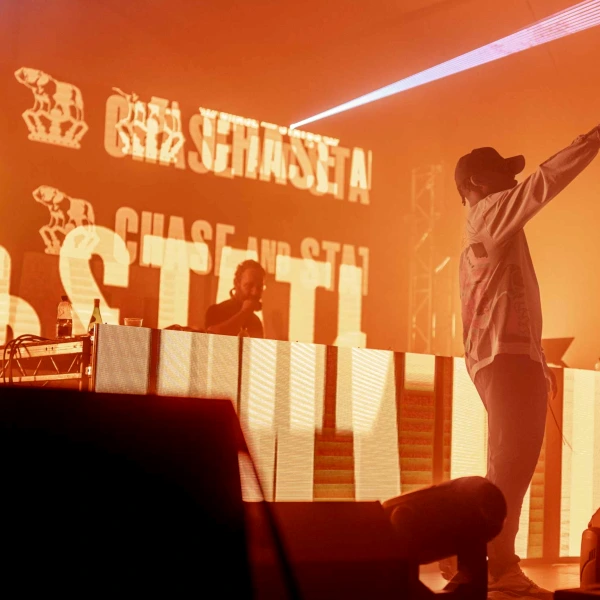
An LED video wall can give visitors a better view of performers, display festival information or provide space for sponsor recognition.
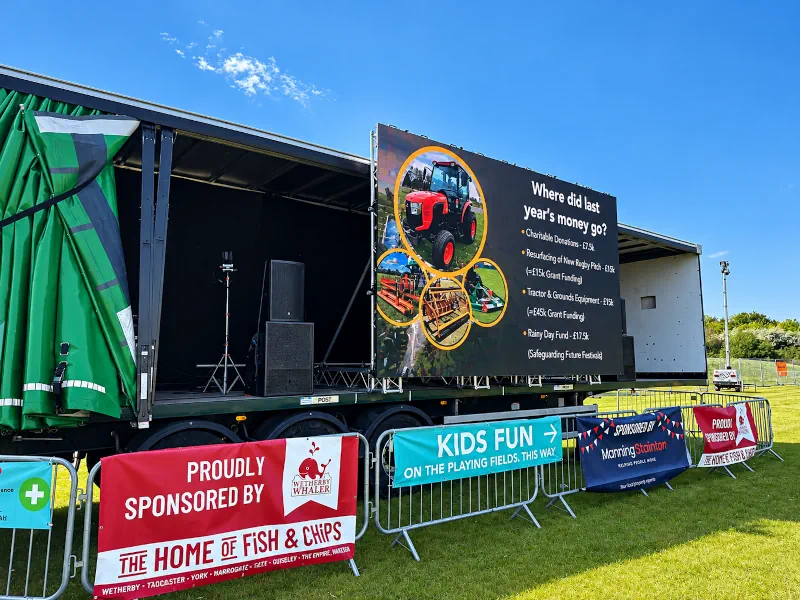
Start by deciding what you want it to achieve. Live camera coverage requires cameras, video processing and someone to manage the pictures. Sponsor slides or scheduled announcements need suitable content and an agreed playback plan.
Position the screen where the intended audience can see it, taking account of daylight, viewing distance and nearby structures.
Prepare logos, videos and information slides to the dimensions supplied by your production team. Keep text concise and readable so visitors can understand it without stopping to study the screen.
9. Plan announcements and audience communication
Visitors may need information about performances, activities, lost property or changes to the programme.
Decide who will make announcements and which areas need to hear them. The main stage PA may cover the entertainment area without reaching every bar, entrance or seating space.
Your production supplier can help you understand the proposed coverage and how announcements will be handled during performances and between sets.
Keep routine announcements distinct from the event’s emergency communication arrangements. Any emergency requirements should be agreed through the event’s wider safety planning, with the relevant competent advisers.
Brief the people making announcements so they know how to use the equipment and who to contact for technical assistance.
10. Confirm the complete production package
Before booking, check that your quotations cover the services and equipment you expect.
Depending on the festival, this could include sound, lighting, staging, video screens, delivery, installation, technical crew and removal. Establish where responsibility sits for related services such as power and temporary structures.
Confirm the working hours, access arrangements and overnight arrangements for equipment left on site. Make sure collection times fit around the rest of the festival breakdown.
A coordinated production package can make communication easier, particularly when sound, lighting and video need to work together. Whichever arrangement you choose, give every supplier a clear brief and identify who is responsible for each part.
Planning Beer Festival Production with Audioserv
You don’t need a finished technical specification before getting in touch. Your festival dates, location, expected attendance and entertainment plans are enough to start a useful conversation.
Audioserv provides sound, lighting, LED video walls and event production support for beer festivals, with experience including Wetherby Beer Festival. Based in Leeds, we work across Yorkshire and throughout the UK.
We can help you work through the production requirements and put together a package that suits your site, programme and budget.
Find out more about our event production services, explore our LED video wall hire options, or contact Audioserv to discuss your festival.